Systems & Tec/How Does Schema Inference in Spark Handle Data Type Mismatches?
November 23, 2024
How Does Schema Inference in Spark Handle Data Type Mismatches?
Spark Schema Inference When we working with Apache Spark to process large datasets, schema inference is a helpful feature that automatically detects data types…
Spark Schema Inference
When we working with Apache Spark to process large datasets, schema inference is a helpful feature that automatically detects data types for columns. However, mismatched or inconsistent data can introduce challenges, affecting how Spark interprets the schema and processes your data.
Schema inference can add processing overhead as Spark needs to analyze the data to determine the schema.
Let’s explore how schema inference in Spark addresses these mismatches and what you can do to ensure data consistency.
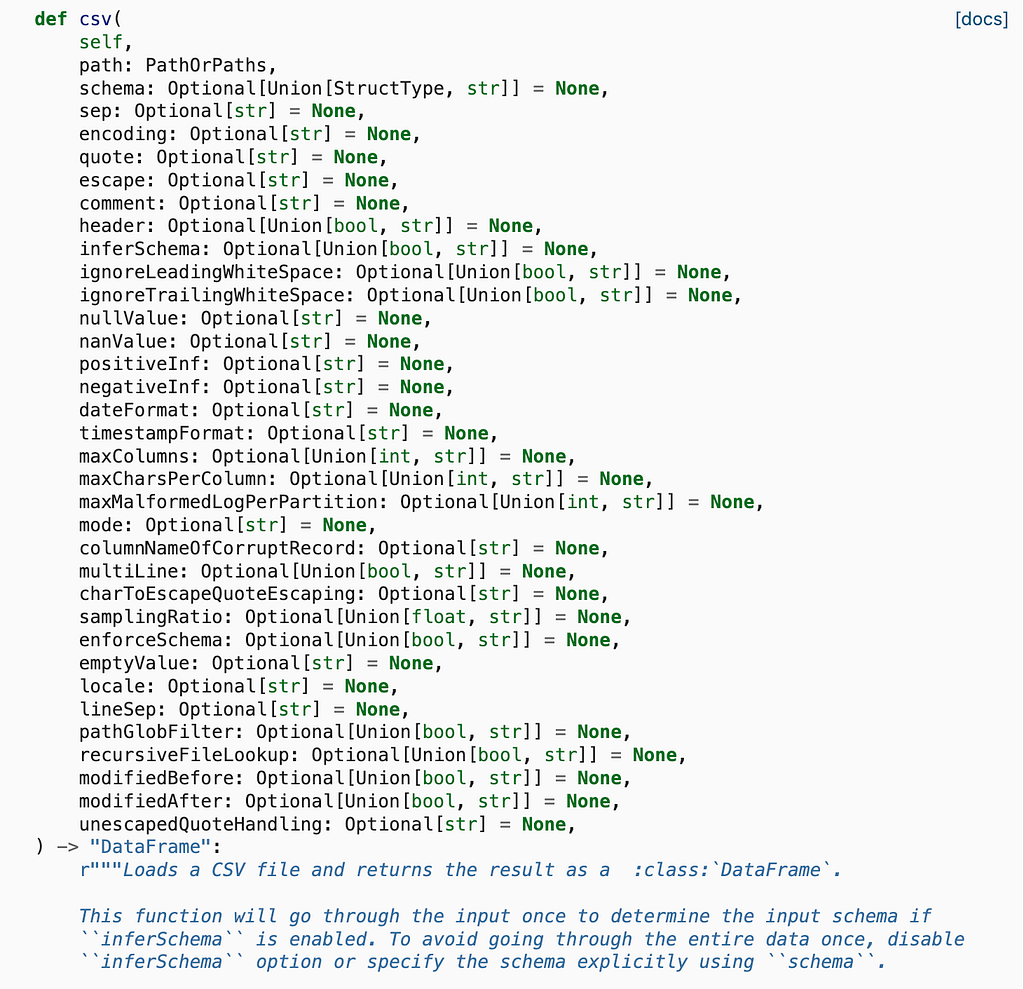
🎯 What is Schema Inference in Spark?
Schema inference in Spark automatically determines the data type for each column in a dataset by sampling its content. It simplifies loading data into structured DataFrames without requiring manual schema definitions.
Enabling schema inference:
val df = spark.read
 .option("inferSchema", "true")
 .csv("path/to/file.csv")
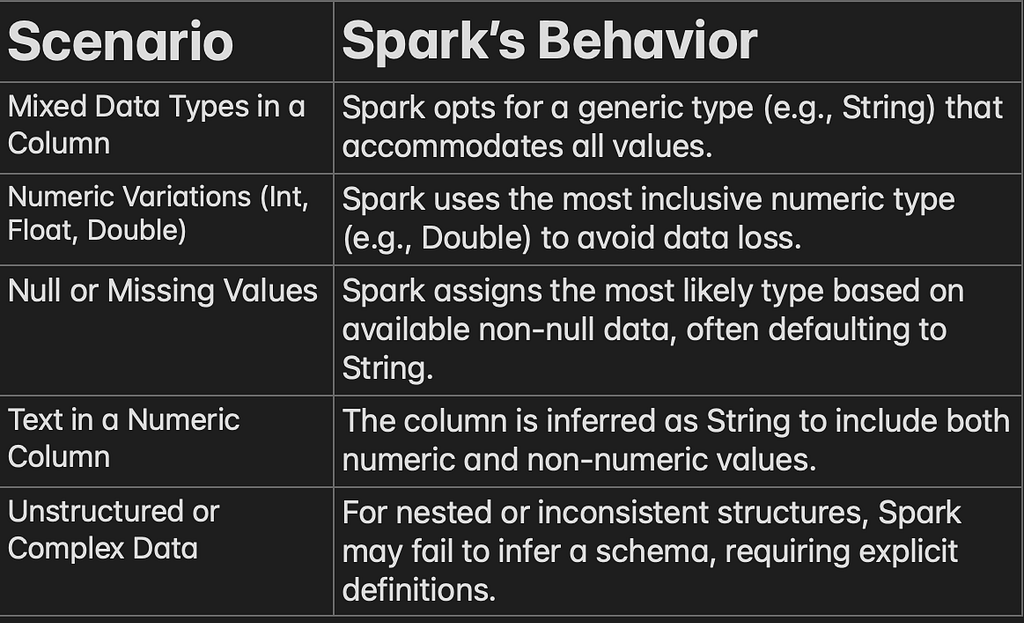
📍 How Spark Handles Data Type Mismatches
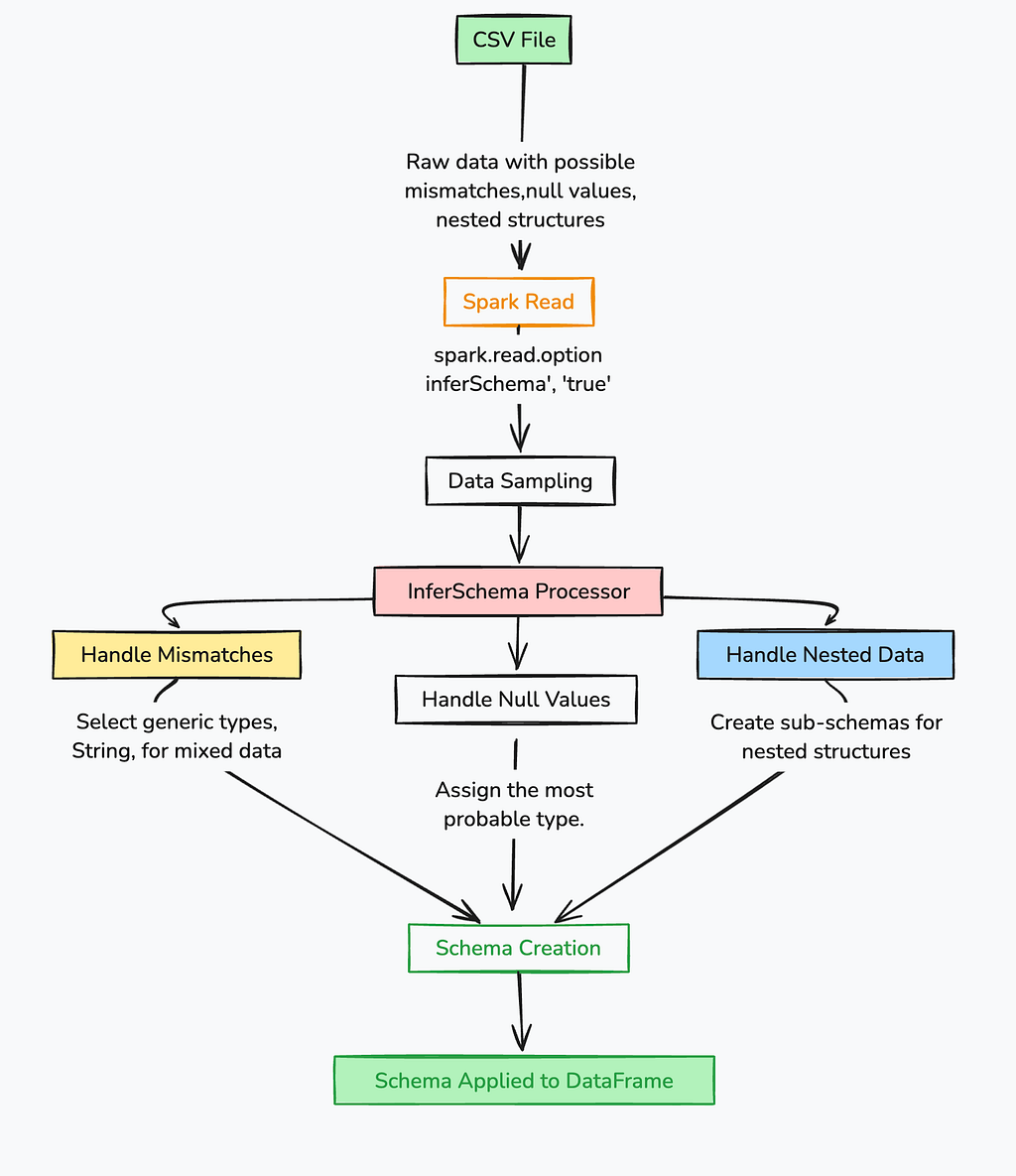
The diagram illustrates how Apache Spark’s inferSchema handles mismatched data types, null values, and nested structures while inferring and applying a schema to a DataFrame.
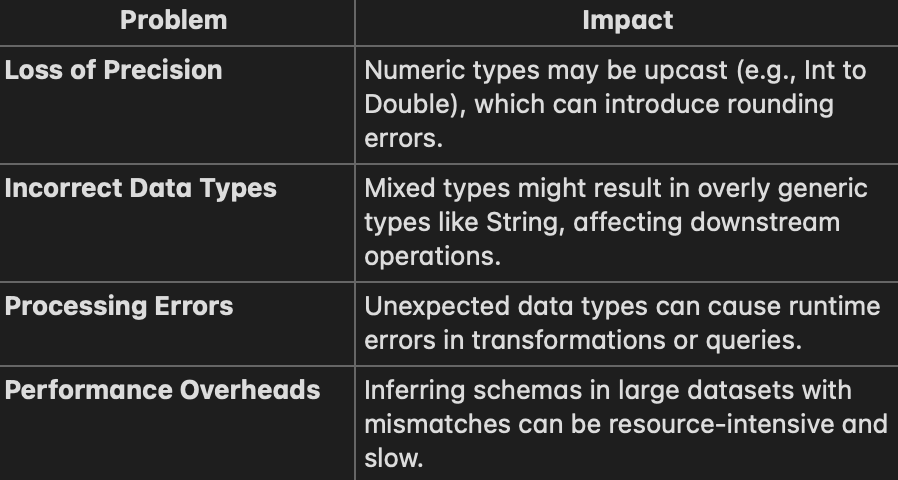
🚨 Challenges with Data Type Mismatches
🔑 Best Practices for Handling Data Type Mismatches
- Validate Data Consistency
Ensure data types are consistent within each column before loading into Spark. - Define Schemas Explicitly
Avoid relying on inference by specifying schemas:
import org.apache.spark.sql.types._
val schema = StructType(Array(
    StructField("Name", StringType, true),
    StructField("Age", IntegerType, true)
))
val df = spark.read.schema(schema).csv("path/to/file.csv")
- Preprocess Data
Clean your data to handle nulls, mixed types, or outliers before loading into Spark. - Use Sampling Options
Adjust sampling size to improve inference accuracy for larger datasets:
spark.read.option("samplingRatio", "0.5").csv("path/to/file.csv")✨ Conclusion
Schema inference in Spark is powerful but not foolproof. It handles mismatched data types by choosing generic or inclusive types to accommodate inconsistencies, but this can lead to performance issues or inaccuracies. For robust and predictable data processing, consider defining schemas explicitly and cleaning your data beforehand.
📌 Got questions or tips about schema inference? Share them in the comments! 🚀